Resume, Cover Letter and Interview Tips for Getting Hired as a Non‑German Speaking Expat in Germany


Abhishek Singla
Introduction: You Live in Germany, but Your German Is… Not There Yet
You moved to Germany for a better career, lifestyle, or adventure. The economy is strong, salaries are solid, and companies are desperate for skilled people.
There is just one big problem: you do not speak German, or only at a basic level. Every job ad you open seems to scream “Fluent German required.” It is frustrating and can feel like a dead end.
It is not.
This guide walks you step by step through how to get hired in Germany as a non‑German speaking expat: which companies to target, how to write a German‑style CV and cover letter in English, what to expect in interviews, and how to use Prepzo AI as your personal AI career coach at every stage.
Can You Get a Job in Germany If You Only Speak English?
Yes, you can. You just cannot apply everywhere.
Germany actively attracts international talent, especially in tech, engineering, research, and finance. According to the official portal Make it in Germany, the official portal of the German Federal Government, skilled professionals from abroad are a key part of the country’s strategy to fill talent gaps.
The trick is to target the right type of companies and roles where English is either the main working language or genuinely accepted.
Reality check: who actually hires non‑German speakers?
You will usually find English‑speaking roles in:
- Multinational corporations with global teams
- Tech companies and startups, especially in Berlin, Munich, Hamburg
- IT and software companies working with international clients
- Finance, consulting and shared service centers serving global markets
- Research institutes, universities and NGOs with international projects
On the other hand, jobs that rely heavily on local clients or regulations (local sales, retail, public sector, many healthcare roles) often require strong German.
Top cities and sectors for English‑speaking jobs in Germany
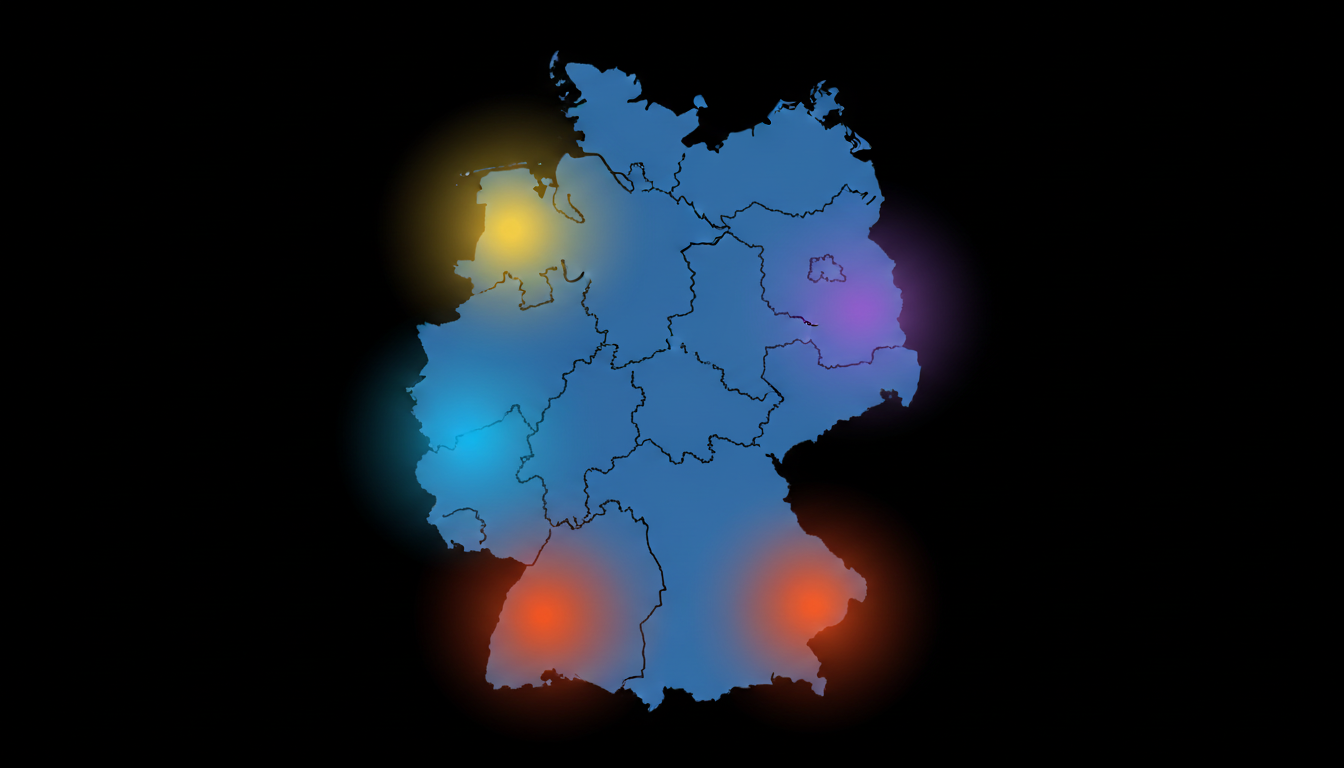
Cities with the highest concentration of English‑speaking jobs:
- Berlin – Startups, tech, creative industries, product and marketing
- Munich – Automotive, tech, engineering, finance, corporate HQs
- Frankfurt – Banking, fintech, consulting, shared service centers
- Hamburg – Logistics, media, maritime, tech
- Also promising: Cologne, Stuttgart, Düsseldorf for engineering and industry
Sectors where “jobs in Germany for English speakers” are common:
- Software engineering and development
- Data science and analytics
- Product management and project management
- Marketing, content, growth, UX
- Customer success and support for global products
- Research roles in STEM and social sciences
Typical requirements beyond language
For many English‑speaking roles, companies care more about:
- Strong technical or professional skills (coding, data, finance, marketing, design)
- Degree or relevant certifications (STEM, business, design, etc.)
- Work experience in an international or multicultural environment
- Visa eligibility (for example EU Blue Card or skilled worker visa)
- Soft skills: communication, ownership, adaptability, ability to work in cross‑border teams
You can learn more about general work and residence rules for foreigners on sites like Employed worker in Germany – EU Immigration Portal.
Types of Companies to Target as a Non‑German Speaker
Not all companies are created equal when you do not speak German. Focus your energy where you actually have a chance.
Multinational corporations and shared service centers
Look for:
- Global brands with offices in Germany
- Companies with “English is our company language” in their job descriptions
- Shared service centers handling global support, finance, IT or HR
Why they work for you:
- Established processes for hiring international employees
- HR and teams already used to English as a working language
- Often offer relocation and visa support for in‑demand roles
Tech and startup ecosystem (Berlin, Munich, Hamburg)
If you are looking for “startup jobs in Germany English only” or “Berlin startup jobs English speaking,” you are in the right zone.
Startups and scaleups:
- Often default to English because teams are international
- Care more about your impact and skills than your nationality
- May be flexible on visa support, especially for hard‑to‑fill roles (developers, data, product)
Search for:
- “English speaking jobs in Berlin Germany”
- “IT jobs in Germany for English speakers”
- “startup jobs Berlin English”
Research institutes, universities and international NGOs
Research institutions and universities frequently operate in English, especially in:
- PhD and postdoc positions
- EU‑funded projects
- International research collaborations
Universities and institutes often have clear guidelines on hiring internationals. For general application structure, resources like Alumniportal Deutschland – How to write a German CV and cover letter can be useful.
Remote‑friendly companies based in Germany
Many German companies now hire employees who work fully remote or hybrid.
Clues to watch for in job ads:
- “Remote possible” or “work from anywhere in the EU”
- English as working language
- Teams spread across time zones
Remote roles can sometimes be more flexible about German level, especially if you rarely deal with local customers.
Red flags: when German is realistically mandatory
Be cautious with:
- Local customer‑facing roles (B2C retail, local sales, public administration)
- Jobs mentioning “C1/C2 German” or “native level German”
- Positions requiring regular contact with German authorities or legal entities
You can still apply if your profile is exceptional, but expect German to be a real hiring criterion.
Where and How to Find English‑Speaking Jobs in Germany
Once you know which companies to target, you need a focused job search system.
Job boards and platforms for English‑speaking roles
Useful job boards and filters:
- Global sites (LinkedIn Jobs, Indeed, Glassdoor) with location set to Germany and language filter set to English
- Niche platforms focused on English‑speaking or tech roles (for example Stack Overflow Jobs, some startup and tech boards)
- Company career pages of big multinationals and well‑known startups
Combine keyword searches like:
- “work in Germany for English speakers”
- “vacancies in Germany for English speakers”
- “English speaking jobs in Munich Germany”
- “English speaking jobs in Frankfurt”
Using LinkedIn and company career pages strategically
On LinkedIn:
- Set your location to your German city (or “Greater Munich Area” etc.)
- Add “Open to work in Germany / EU” with target roles like “software engineer Germany”
- Follow target companies in Berlin, Munich, Frankfurt and engage with their content
- Use the “Jobs” tab with filters: Language = English, Experience level, On‑site / remote
On company sites:
- Bookmark the career pages of your top 20 companies
- Set up job alerts where possible
- Apply directly via the company portal when you see a strong match
Networking as an expat (meetups, events, online communities)
Your next job in Germany may not come from a job ad at all.
Try:
- Meetups for expats, developers, designers, data people in cities like Berlin or Munich
- Slack/Discord communities of international professionals in Germany
- Alumni networks from your home university if they have German chapters
- Conferences and hackathons where English is common
Focus on building relationships, not just asking for jobs. Many hires happen because someone internally says “I know a person who fits.”
How Prepzo AI can help you shortlist high‑fit roles
Instead of sending out random applications, use a system.
With Prepzo AI:
- You can upload a job description and your resume, and Prepzo will show you how strong your match is.
- You get an objective score plus suggestions on what to highlight or improve.
- You can quickly see which roles are worth serious effort and which are not.
Explore how Prepzo AI supports your entire job search here:
How Prepzo.ai Transforms Your Job Search
Or jump straight to the homepage and start using it as your AI career coach:
Prepzo AI – All in one AI partner for your job search
How to Write a German‑Style CV (Lebenslauf) as an Expat
Your CV is usually your first impression. In Germany, that CV is often called a Lebenslauf, and it has a very specific structure.
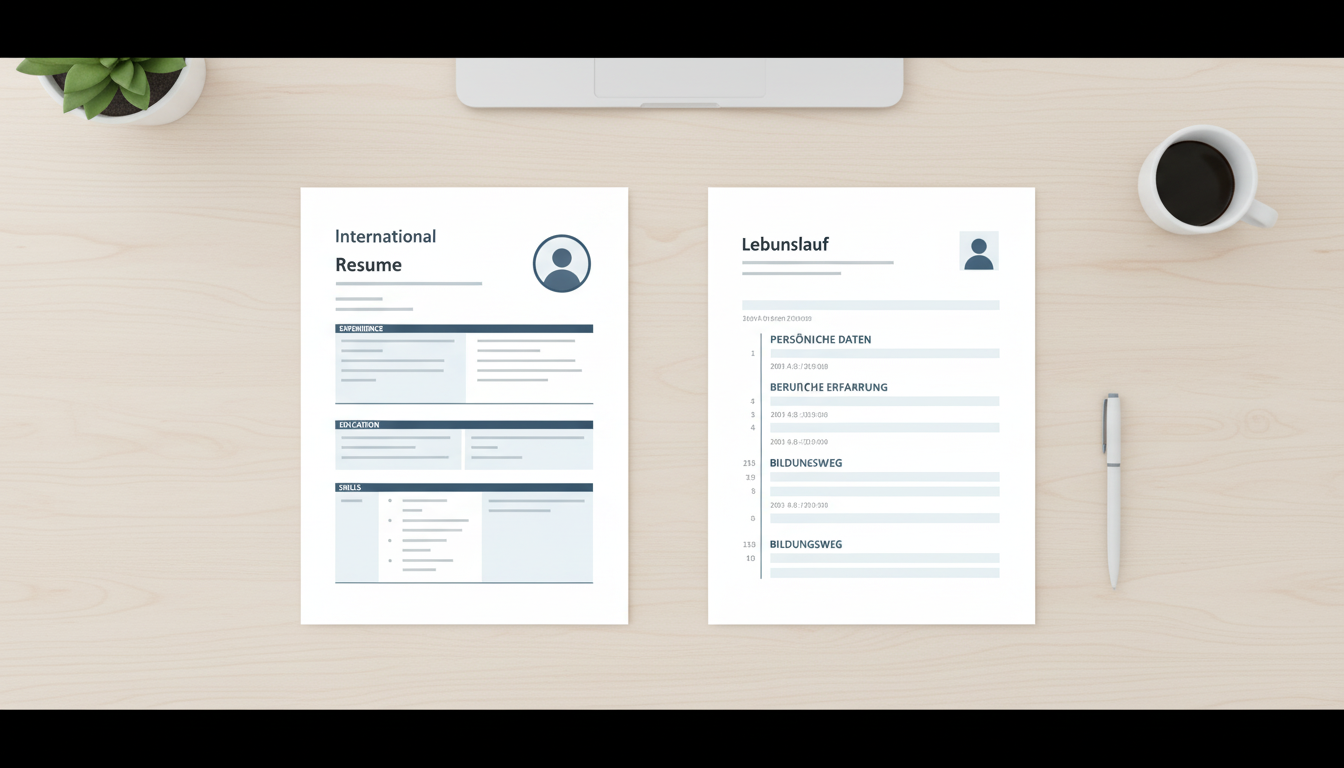
German CV vs international resume: key differences
Compared to a typical US/UK resume, a German CV usually:
- Is 2 pages for experienced professionals (1 page is fine for juniors)
- Has a very clean, chronological layout
- Starts with personal data (name, contact, sometimes birth year and location)
- Includes detailed education and often grades
- Sometimes includes a professional photo (more on this below)
- May include signature and date at the bottom (traditional, now optional)
German recruiters care a lot about clarity and completeness. They want to quickly see:
- Your latest role and main responsibilities
- Relevant technologies, tools, and achievements
- Degree, major, and institution
- Language levels and any German studies
Core sections of a German CV (and what to put in each)
A solid structure:
-
Personal details
- Full name
- City in Germany (for example “Berlin, Germany”)
- Phone number with country code
- Professional email
- LinkedIn URL, portfolio or GitHub if relevant
-
Professional summary (3–5 lines)
- Your role, years of experience, key skills
- Focus on relevance to German or European employers
-
Work experience (reverse chronological)
For each role:- Job title, company, location, dates (MM/YYYY)
- 3–6 bullet points with impact and metrics
- Tools, technologies, markets you worked with
-
Education
- Degree, field, university, country, graduation date
- Mention thesis topic if relevant to the role
-
Skills
- Technical skills (grouped by category)
- Tools and software
- Soft skills (focus on those relevant to the role)
-
Languages
- Use levels like: Native, Fluent, C1, B2, B1, A2, A1
- Be honest but show your willingness to improve
-
Additional information
- Certifications, publications, volunteering, visa status (if relevant)
Should you include a photo and personal data?
-
Photo:
In Germany, including a professional photo is still common, though not legally required. A neutral, high‑quality headshot can help. If in doubt, it is usually acceptable to include one, especially for corporate roles. -
Personal data:
You do not need to include marital status, religion or number of children, even if some older templates show this. Name, city, contact information and nationality (if visa relevant) are enough.
Example: CV layout that works for German recruiters
Imagine your CV as a clear two‑column structure:
- Left: sections (Contact, Skills, Languages, Education)
- Right: stronger focus on Work Experience and Achievements
Key design tips:
- Use one or two professional fonts
- Keep margins and spacing consistent
- Use bold for job titles and companies
- Avoid graphics that confuse ATS systems
Adapting your existing resume to a German format with Prepzo AI
Adapting your CV manually for each job is time‑consuming. Prepzo AI turns this into a repeatable system.
With Prepzo AI you can:
- Upload your current resume and the job description.
- Get a score on how well your resume matches that specific role.
- Receive a fully rewritten, ATS‑optimized German‑style CV that uses the right structure and keywords.
- Add your own comments if there is something you want to emphasize, for example international mobility or specific projects.
Start improving your CV with AI support here:
- Create a professional resume for free using AI
- AI‑Powered Free Resume Builders: How They Boost Your Career
Or go to the homepage and begin your first resume optimization session:
Prepzo AI – All in one AI partner for job search
Crafting a Cover Letter (Anschreiben) When You Do Not Speak German
Many German employers still expect a cover letter (Anschreiben). As a non‑German speaker, this is where you explain your situation and show your motivation.

Should your cover letter be in English or German?
General rule:
- If the job ad is in English and the company is clearly international, it is safe to write your cover letter in English.
- If the ad is mostly in German but mentions that English is possible, you can:
- Write the cover letter in English, and
- Add one polite sentence in German if you know basic phrases (optional).
- If the ad clearly requires C1 German, a full English cover letter may hurt your chances, unless the recruiter invites it.
When unsure, look at:
- The language of the job description
- The company website and careers page
- LinkedIn profiles of employees (what languages they use)
Structure of a German cover letter (opening, body, close)
A strong Anschreiben usually fits on one page and includes:
-
Header
- Your contact details and the company’s
- Date and subject line (“Application for [Job Title] – [Reference Number]”)
-
Opening paragraph
- Which role you are applying for
- How you found it
- One sentence showing immediate relevance
-
Body (2–3 short paragraphs)
- Why you fit: key achievements, skills, tech stack
- Why this company: product, mission, culture
- How you will contribute in the specific role
-
Closing paragraph
- Availability (start date)
- Mention of visa status if helpful (for example “eligible for EU Blue Card”)
- Call to action: looking forward to an interview
How to explain your language level honestly (and still look hireable)
You do not need to pretend you speak fluent German. Instead, frame it like this:
-
In your CV language section:
- “German: A2, currently improving through evening classes”
-
In your cover letter:
“Although my current German level is A2, I work comfortably in international English‑speaking teams and I am actively improving my German through daily practice and classes. My goal is to reach B2 within the next 12 to 18 months.”
This shows:
- Honesty
- Proactiveness
- Long‑term commitment to integrating in Germany
Tailoring your Anschreiben to the job description
German recruiters can quickly tell if a cover letter is generic. To stand out:
- Mirror keywords from the job description (tech stack, responsibilities, tools)
- Reference specific projects or products from the company
- Align your achievements with the company’s current challenges
You can find additional practical tips on cover letter structure in resources such as Cover Letter – Uni Kassel Career Service.
Example: cover letter paragraph for a non‑German speaking candidate
“In my previous role as a Data Analyst at XYZ, I built dashboards and forecasting models that helped reduce customer churn by 18 percent in 6 months. I worked closely with international teams across Europe and the US, collaborating entirely in English. I am excited to bring this experience to your data team in Berlin, contributing to evidence‑based product decisions while I continue to improve my German language skills.”
Using Prepzo AI to generate and refine cover letters for each role
Writing a fresh cover letter for every role can be exhausting, especially in a new country.
Prepzo AI simplifies this:
- You upload your resume and the job description.
- Prepzo AI generates a tailored cover letter that:
- Connects your career story to the company’s needs
- Uses the right tone for German employers
- Highlights your strengths as an international candidate
- You can add extra instructions, for example:
- “Mention that I’m relocating to Munich next month”
- “Emphasize my experience with SaaS products”
Start deep‑diving into cover letters with these guides:
Or try the tailored Cover Letter Generator directly:
Personalized Cover Letter Generator by Prepzo AI
Application Package Checklist for German Employers
German applications are slightly more document‑heavy than in some other countries. Here is what you usually need.
Documents you usually need (CV, cover letter, certificates)
For most professional roles:
- CV (Lebenslauf) in PDF
- Cover letter (Anschreiben) in PDF
- Certificates or transcripts (optional, often requested later)
- Portfolio or GitHub (for tech, design, content roles)
- References or recommendation letters (sometimes)
For highly regulated professions, companies may ask for:
- Degree certificates and translations
- Proof of professional registration
- Work permits or visa information
Naming your files and email etiquette for German recruiters
Make it easy for recruiters to find you later:
- File names like:
FirstName_LastName_CV_CompanyName_Date.pdfFirstName_LastName_CoverLetter_JobTitle.pdf
Email basics:
- Use a clear subject: “Application for Product Manager – Ref. 12345 – FirstName LastName”
- Keep your email short and professional
- Attach PDFs, not Word docs, unless they specifically ask otherwise
When to mention salary expectations, visa and relocation
-
Salary expectations:
Some German job ads explicitly ask you to include your desired salary. In that case, mention a realistic annual gross salary range in your cover letter. -
Visa and relocation:
You can mention it briefly at the end of the cover letter or during the interview, for example:- “I am currently based in Spain and am available to relocate to Berlin with one month’s notice.”
- “I meet the criteria for the EU Blue Card and can provide documentation on request.”
Preparing for Job Interviews in Germany as an English‑Speaking Expat
You sent your application. You got an interview invite. Now what?
What German employers typically ask international candidates
Expect a mix of:
-
Experience‑based questions:
- “Tell me about a project you are proud of.”
- “How did you handle a conflict in your team?”
-
Technical or case questions:
- Coding tasks or system design for developers
- Case studies for consultants and product managers
- Campaign breakdowns for marketers
-
Motivation and relocation questions:
- “Why do you want to work in Germany?”
- “Why our company and not others?”
- “How long do you plan to stay in Germany?”
-
Language and integration questions:
- “What is your current German level?”
- “How do you plan to integrate into the team and local culture?”
Cultural norms in German interviews (punctuality, directness, titles)
German interview culture is usually:
-
Punctual:
Aim to join a video call 5–10 minutes early. For in‑person interviews, arrive 10 minutes before. -
Direct:
Interviewers may ask straightforward questions about weaknesses, salary, or visa status. This is normal. -
Professional but not cold:
Use polite forms of address at first (Herr / Frau + last name) if the interview is in German. In English, first names are often used. -
Prepared:
Companies expect you to know the basics about their products, market and recent news.
How to answer questions about your German level and integration plans
A balanced answer could look like:
“Right now my German level is B1. I can handle daily life and simple work conversations, but I still switch to English for more complex topics. I am taking classes twice a week and practicing with colleagues. My goal is to reach B2 within the next year so that I can participate fully in meetings held in German.”
Or if you are a beginner:
“I am at A1 level, so I cannot yet work in German. However, I am committed to building a long‑term career in Germany, which is why I have already enrolled in intensive courses and practice daily. I am confident I can quickly reach a level where I can manage basic work interactions.”
Common interview questions and sample answers
-
“Why do you want to work in Germany?”
“Germany offers a strong engineering culture and long‑term stability, which aligns with how I like to build products. I also appreciate the work‑life balance and commitment to quality. I see Germany as a place where I can grow my career over many years, not just a short‑term move.”
-
“How do you work in an international team?”
“In my last role I worked with teammates in three time zones. We used clear documentation, regular check‑ins and shared ownership to stay aligned. I am used to adapting my communication style and respecting cultural differences, which I think is essential in diverse teams like yours.”
-
“What are your salary expectations?”
“Based on my experience and the market in Berlin for this type of role, I am looking for a salary in the range of 65,000 to 72,000 euros gross per year, depending on the overall package and responsibilities.”
Video interviews vs on‑site interviews in Germany
-
Video interviews:
Common for first rounds. Test your connection, camera and microphone. Choose a quiet, well‑lit space. -
On‑site interviews:
May include several rounds in one day, office tour, or a short case exercise. Dress business‑casual unless the company is very formal.
Practicing with AI: mock German‑style interviews via Prepzo AI
Interviews feel less scary when you have already practiced them in a realistic setting.
With Prepzo AI’s interview practice:
- You upload your resume, cover letter, job description and company name.
- Prepzo AI runs a mock interview that:
- Asks questions tailored to the job description
- Uses information about the company’s history and typical hiring patterns
- Incorporates your own experience and profile
- After the session, you receive detailed feedback and a score:
- Which answers were strong
- Where you could be more precise or concise
- How to better frame your motivation and international background
You can then repeat the interview and aim for a better score each time. This is especially powerful when you are not used to German interview styles.
Explore interview‑specific guidance here:
After the Interview: Follow‑Ups, Offers and Negotiations
You completed the interview. Now you want to move from “We will get back to you” to “Welcome to the team.”
How and when to send a thank‑you email in Germany
Sending a polite thank‑you email within 24 hours is good practice and well received.
Keep it short:
- Thank them for their time
- Mention one or two topics from the conversation
- Reconfirm your interest and fit
Example:
“Thank you again for the insightful conversation yesterday about the Product Manager role. I especially enjoyed hearing about your roadmap for the German market. I am very excited about the opportunity to contribute and look forward to next steps.”
Understanding German employment contracts and probation periods
German contracts typically include:
- Probation period (usually 3–6 months)
- Notice periods
- Working hours and vacation days
- Salary and bonus structure
- Any non‑compete or confidentiality clauses
For general overviews of labor law, see resources like Labour Law – German Federal Ministry of Labour and Social Affairs.
If in doubt, consider asking a local advisor or union/employee representation group to look over your contract.
Negotiating salary and benefits as a foreigner
You can and should negotiate, respectfully.
Tips:
- Research typical salary ranges for your role and city
- Propose a range, not a fixed number
- Consider the full package: relocation support, training budget, remote days, bonus
Be confident: they invited you because they need your skills.
Step‑by‑Step Action Plan: From Non‑German‑Speaking Expat to Hired
This section ties everything together into a practical roadmap.
30‑day plan to get your CV, cover letter and LinkedIn job‑ready
Week 1: Foundation
- Define your target roles and cities (for example “data analyst Berlin,” “product manager Munich”).
- Update your LinkedIn headline and location to Germany.
- Collect old resumes, certificates and portfolio items.
Week 2: CV upgrade
- Build a German‑style CV with Prepzo AI:
- Upload current resume and a sample job description.
- Let Prepzo create an ATS‑optimized version.
- Refine it based on your preferences.
Week 3: Cover letter system
- Identify 5–10 target companies.
- For each role, use Prepzo AI to generate a tailored cover letter.
- Save your best paragraphs as reusable building blocks.
Week 4: Interview preparation
- Use Prepzo AI to run mock interviews for 2–3 of your top roles.
- Note recurring questions and improve your answers.
- Prepare 3 strong stories about your achievements, challenges and teamwork.
Weekly application rhythm (how many roles, how to track)
Aim for:
- 10–15 high‑quality applications per week
- A simple spreadsheet or tracker with:
- Company, job title, link
- Date applied
- Status (applied, phone screen, interview, offer)
- Notes (contact person, salary range, follow‑up dates)
Focus on roles where:
- Your skills match at least 60–70 percent of the requirements
- English is clearly accepted
- You feel genuine interest in the product or mission
How to use Prepzo AI at each step of your job search
Throughout your journey, Prepzo AI acts as your AI career coach and mentor:
-
Finding and prioritizing roles
- Use job descriptions with your CV in Prepzo AI to see where you have the strongest match.
-
Perfecting your resume
- Upload your resume + job description.
- Get a score, improvement suggestions and a new, ATS‑optimized version tailored for Germany.
-
Building compelling cover letters
- Use your resume + job description.
- Generate cover letters that connect your story to the company culture and role.
-
Practicing interviews
- Use your documents and the company name to simulate realistic interviews.
- Get feedback and aim to improve your score with each practice round.
With transparent pricing starting from 7.99 euros per month and 19.99 euros per month for more intensive use, it is a small investment with outsized impact on your career in Germany.
Start here: Prepzo AI – All in one AI partner for job search
FAQs About Getting a Job in Germany Without Speaking German
Can I get a job in Germany if I only speak English?
Yes. Many international companies, tech startups and research institutes work primarily in English. You will likely find more opportunities in big cities like Berlin, Munich, Frankfurt and Hamburg, and in sectors such as IT, engineering, finance and research.
What does a German‑style CV (Lebenslauf) look like for foreigners?
A German CV is usually 1–2 pages, chronological, and clearly structured. It includes personal details, a short summary, work experience, education, skills, languages and additional info like certifications or projects. You can follow local norms without hiding that you are an international candidate.
Should I write my CV and cover letter in English or German when I do not speak German?
If the job posting is in English and the company is international, an English CV and cover letter are usually fine. If the ad is in German but mentions English as a working language, it is still acceptable to write in English, while clearly stating your current German level and your learning plans.
What types of jobs in Germany do not require German?
Often:
- Software development and engineering
- Data science and analytics
- Product management and some project roles
- Marketing, content and growth for global products
- Customer success and support for international markets
- Research roles in universities and institutes
Customer‑facing roles targeting local German clients usually need German.
How do I tailor my resume for German companies as an expat?
Use a clean German CV structure, show your most recent and relevant experience first, and align your achievements with the job description. Mention your language skills clearly, including your German level. Tools like Prepzo AI can adapt your existing CV to German expectations and the specific role.
What do German employers ask in job interviews with international candidates?
They typically ask about your previous projects, technical skills, motivation to work in Germany, experience in multicultural teams, and your language level. They may also discuss your relocation plans, visa status and long‑term intentions to stay.
How formal are job interviews in Germany compared to other countries?
German interviews are usually professional and a bit formal, but not stiff. You can expect direct questions and honest feedback. Punctuality and preparation are very important. With international companies, the atmosphere can feel more relaxed and similar to other global tech hubs.
Do I need to include a photo on my CV for German companies?
It is still common in Germany to include a professional photo, but it is not legally required. For many international companies, it is optional. If you include one, make sure it is a high‑quality, neutral, business‑appropriate headshot.
How can I explain my lack of German skills in my cover letter or interview?
Be honest, but show commitment:
- State your current level (for example “German: A2”).
- Mention that you are actively learning (classes, apps, daily practice).
- Emphasize your strong English communication skills and experience in international teams.
- Share your goal for future German proficiency (for example “aiming for B2 in 12–18 months”).
Which German cities are best for English‑speaking jobs?
The best cities for English‑speaking jobs in Germany are typically:
- Berlin – Startups, tech, creative roles
- Munich – Engineering, automotive, corporate HQs
- Frankfurt – Finance, banking, consulting
- Hamburg – Logistics, media, tech
Other industrial hubs like Stuttgart, Cologne and Düsseldorf are also worth exploring, especially for engineering and manufacturing roles.
Related Prepzo AI Tools to Supercharge Your German Job Search
To turn this guide into real interviews and offers, pair it with Prepzo AI’s tools:
-
Prepzo AI Resume Builder
- Upload your current CV and the job description.
- Get a match score, improvement suggestions and a fresh, ATS‑optimized German‑style CV that aligns with recruiter expectations.
- Explore how to boost your resume here:
-
Prepzo AI Cover Letter Generator
- Generate tailored cover letters that connect your international background with the company’s culture and needs.
- Adjust tone, add personal notes and highlight specific achievements.
- Try it now: Personalized Cover Letter Generator
-
Prepzo AI Interview Practice
- Simulate real German‑style interviews using your CV, cover letter, job description and company name.
- Receive structured feedback and a score so you know exactly what to improve.
- Learn more about building a repeatable interview system:
With plans starting at 7.99 euros per month and 19.99 euros per month, Prepzo AI is designed to be an affordable, high‑leverage investment in your career in Germany.
Conclusion: Your German Job Is Closer Than It Feels
Not speaking fluent German does not have to be a career stopper. If you:
- Target the right companies and cities
- Use a German‑style CV and a clear, honest cover letter
- Prepare smartly for interviews
You can absolutely build a strong, long‑term career in Germany as an expat.
Turn this guide into action today. Let Prepzo AI be your AI career coach, help you find high‑fit roles, perfect your resume, craft persuasive cover letters and practice interviews until you feel ready to say “Ja” to your first German offer.
Start now: Prepzo AI – One‑stop AI partner for landing your next job
References
- Make it in Germany. “Working, studying, living in Germany.” Available at: https://www.make-it-in-germany.com/en/
- German Federal Ministry of Labour and Social Affairs. “Labour Law.” Available at: https://www.bmas.de/EN/Labour/Labour-Law/labour-law.html
- Alumniportal Deutschland. “How to write a German CV and cover letter.” Available at: https://www.alumniportal-deutschland.org/en/digital-learning/career-development/german-cv/
Abhishek Singla
Related Articles

Healthcare Industry-Specific Resume Templates: Your Path to Medical Excellence
Showcase not just your medical knowledge but also your ability to work in high-pressure environments, collaborate with multidisciplinary teams, and maintain the highest standards of patient care

Sneha Satapathy

Finance Industry-Specific Resume Templates: Copy-Paste Samples to Land Interviews
Copy-paste finance resume templates plus tips for ATS-friendly, professional resumes.
Sneha Satapathy

AI Resume Builder: How AI Can Get Your Resume Past the ATS
Struggling with resume rejections? Discover the best AI Resume Builder to create ATS-friendly resumes with smart keywords & pro templates.
Sneha satapathy